 Bad BunnyArtist profile →
Reggaeton’s most threatening lawsuit just lost its engine. On Tuesday (Sept. 1), U.S. District Judge André Birotte Jr. reversed his own July ruling and tossed the central copyright theory in the case against Bad Bunny, Drake and more than 150 other artists, according to Rolling Stone, which obtained the order.
The suit, filed in 2021 by Cleveland “Clevie” Browne and the heirs of Wycliffe “Steely” Johnson, argued that their 1989 song “Fish Market” is the source of the dembow rhythm, the percussion pattern that runs through the genre. Their claims eventually reached nearly 2,000 songs, among them “Despacito,” “Tití Me Preguntó” and “Dame Tu Cosita,” per Music Business Worldwide.
Read moreDrake’s HABIBTI (FOMO) Is Tracking for No. 2 as Coachella 2027 Talk Builds
Birotte had ruled in July that the dispute belonged in front of a jury. Bad Bunny’s lawyers asked him to think again, calling the claim a “Frankenstein” copyright because the arrangement the plaintiffs describe does not appear in any single song they own. After an Aug. 14 hearing, he agreed.
Because plaintiffs have not identified a single copyrighted work containing the alleged protectable selection and arrangement, plaintiffs cannot, as a matter of law, proceed on the theory presently pleaded.
Judge André Birotte Jr., in his order, Rolling Stone
What it means for reggaeton
Kenneth Freundlich, Bad Bunny’s lead lawyer, had warned that the discovery and trial preparation for the original case could run “into 2035.” After the ruling, he called it a win for the whole genre:
The court has now confirmed what the defendants have maintained from the outset: that copyright protects an original, single work, not a combination of elements assembled from several different songs for the purpose of a lawsuit.
Kenneth Freundlich, Bad Bunny’s lawyer, Rolling Stone
Other defendants who backed the motion include Karol G, Daddy Yankee, J Balvin, Pitbull and Justin Bieber, as well as Drake’s OVO Sound, UMG Recordings and Empire. Complex notes the ruling shields more than 150 artists.
What’s still in play
This isn’t the end of the case. Birotte did not rule on whether the rhythm itself is original, and claims that individual artists directly sampled Steely & Clevie’s sound recordings are still alive, though Remezcla describes them as much narrower. The judge told the parties to propose a schedule for those remaining claims.
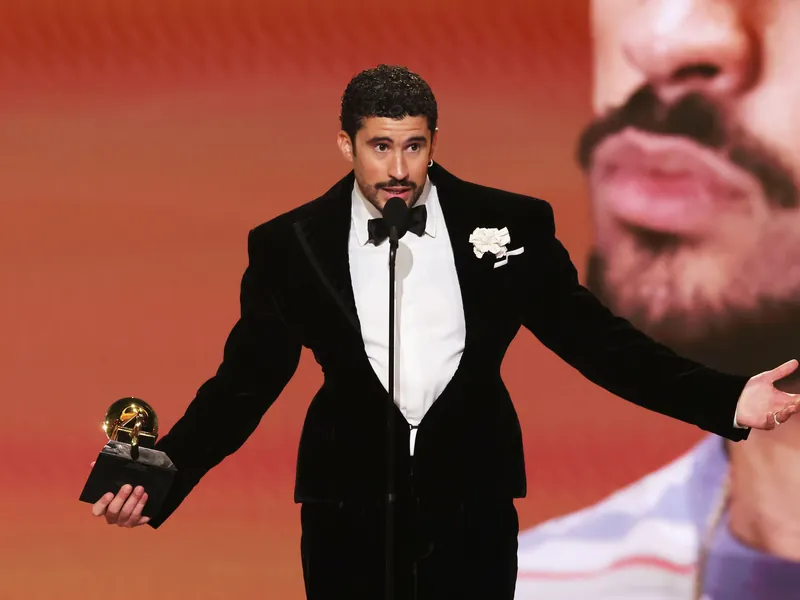
The win lands in a big year for Bad Bunny, who headlined the Super Bowl LX halftime show in February and took the Grammy for Album of the Year with Debí Tirar Más Fotos.
- Ruling
- Sept. 1, 2026, Judge André Birotte Jr.
- Case
- Steely & Clevie v. Bad Bunny and more than 150 other artists
- Claimed work
- “Fish Market” (1989)
- Still alive
- Narrower direct-sampling claims
Added to the High Grailed archive on October 12, 2026.