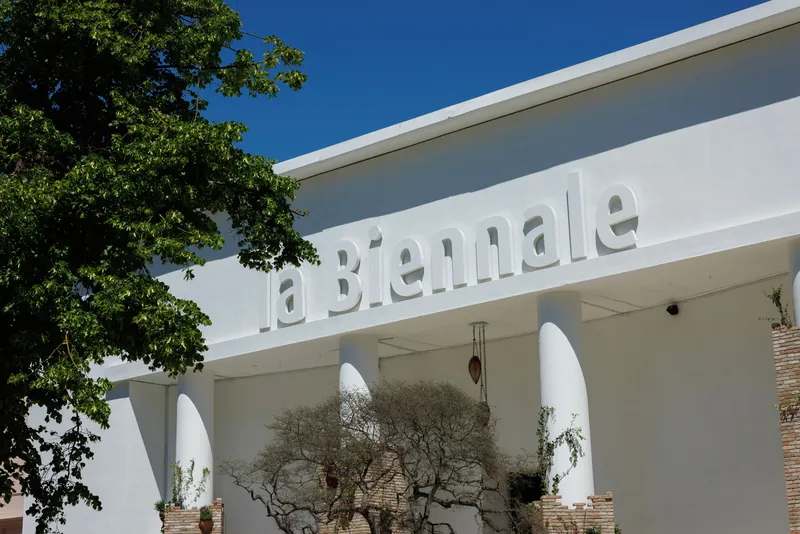
The Venice Biennale’s summer has been about more than Koyo Kouoh’s In Minor Keys. On Thursday (July 23), the foundation’s president, Pietrangelo Buttafuoco, said the European Union’s decision to pull a €2 million grant over Russia’s pavilion was made “for reasons that are entirely political, certainly not legal, and still less cultural.”
He made the remarks in a public address, as ARTnews reported, and his answer was a refusal to back down. “We are called here to pursue international research in the arts and to respond to their demands,” he said. “Otherwise we would betray the principles of autonomy, freedom of expression, research, creativity, and imagination that have defined this institution for 131 years.”
What the EU Did
The European Commission recommended cutting the grant on July 11, after Henna Virkkunen, one of the Commission’s leaders, wrote that “culture in Europe—funded with taxpayers money—should promote and safeguard democratic values.” The agency that runs the funding, EACEA, made the suspension official on July 21. A Commission spokesperson said projects paid for with European money should uphold “democratic values” and “freedom of expression—values that are not respected in today’s Russia.”
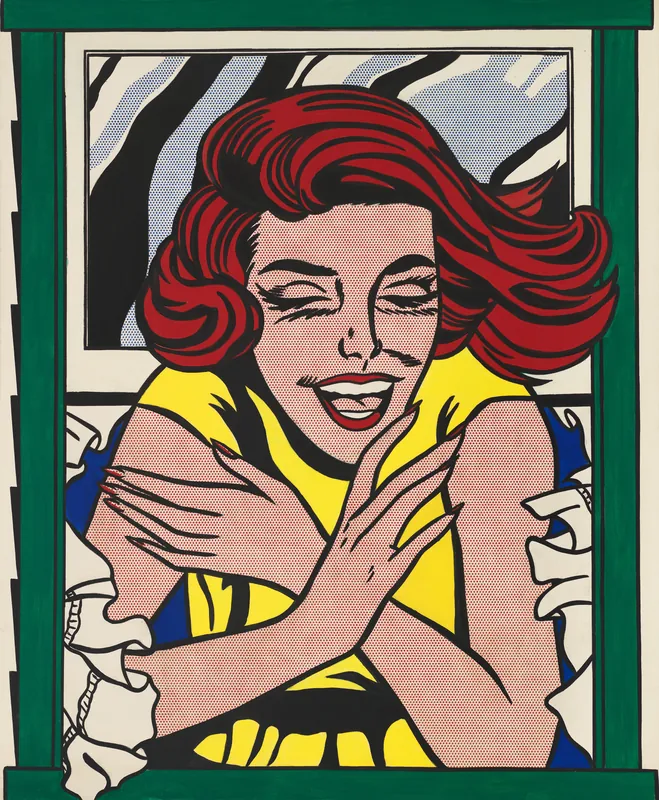
Read moreRoy Lichtenstein’s Whitney Retrospective Says He Saw the Repost Coming
The Commission had warned the Biennale in April, giving it 30 days to “clear its name.” Russia had canceled its 2022 pavilion and in 2024 gave its building over to Bolivia, so this would have been its first since the invasion of Ukraine. This year’s pavilion opened for the preview days but closed before the public opening, and it is still shut, ARTnews reports.
The Biennale’s Defense
The Biennale says it can’t exclude a country that owns a permanent building in the Giardini, and that it hasn’t violated sanctions. It also says the €2 million went to its cinema department, including the BiennaleCollege and the Venice Production Bridge, which have “no connection whatsoever to Russia’s participation in the Art Biennale.” The cut, it said, has no significant impact on its budget or its scheduled programs.
The Kremlin weighed in too, telling the state news agency TASS it regretted “ongoing attempts to cancel our culture in other countries.” During the preview days, protesters led by Pussy Riot’s Nadya Tolokonnikova and the group FEMEN let off smoke flares outside the Russian pavilion, and some pavilions went on strike over the inclusion of both Russia and Israel.
Why It Matters
The grant is a fraction of the Biennale’s overall budget, ARTnews notes, but the dispute has followed the show since before it opened. It hasn’t erased the exhibition: the Guggenheim’s Naomi Beckwith, in a Venice verdict for The Art Newspaper, described Kouoh’s show as “a polyphony of propositions,” while the Hartwig Art Foundation’s Beatrix Ruf said it felt far more major than minor to her.
The Biennale says it will take its case to “all appropriate forums.” For the art side of the summer, see our guide to the month’s exhibitions, which includes Venice, and for the market side, Art Basel’s strong June.
- Grant
- €2 million ($2.3 million) from the EU, suspended July 21, 2026
- Reason
- Russia’s pavilion at the 61st Venice Biennale
- Biennale position
- Cannot exclude Russia; grant went to the cinema department, not the art show
Sources
Added to the High Grailed archive on October 12, 2026.