The 61st Venice Biennale opened to the public on Saturday (May 9), after three preview days that felt like a fever dream even by Biennale standards. There was a naked performer hanging from a giant bell, babies on strike, a storm, and music everywhere. Dazed called opening week “an art-induced fever dream” and warned that the FOMO was inevitable.
It is also a sad Biennale. The main show, In Minor Keys, was conceived by the curator Koyo Kouoh, who died in May 2025. La Biennale, with her family’s support, decided to realize her exhibition with the team she had picked, and it runs through Nov. 22 at the Giardini, the Arsenale and sites across the city. About 110 invited artists and collectives are in the main show, and the Golden Lions for Lifetime Achievement are not being awarded because Kouoh was unable to finalize them, according to the Biennale.
The main show: slow down
The title is musical on purpose, and so is the instruction. An ARTnews diary from the Arsenale calls the exhibition “a statement on perseverance and play.” The Arsenale opens with a poem on the wall by Refaat Alareer, written before he was killed in Gaza in 2023, which ends in a kite. ARTnews reports that it starts the show’s strongest thread, about how people survive and still make things.
If I must die / you must live
Refaat Alareer, ARTnews
Elsewhere, Guadalupe Maravilla’s new Disease Thrower sculptures include a version of the blue bunny hat worn by a 5-year-old boy detained by ICE, and Marcel Duchamp’s Boîte-en-valise sits in the Giardini, a reminder, ARTnews says, of his line that everything important he’d done could fit in a suitcase.
The pavilions people queued for
Austria’s was the one with the line. Florentina Holzinger’s Seaworld Venice is a performance cycle that starts when a naked woman, hung as the clapper, tolls a giant bell, and it includes a tank of treated water from two toilets that visitors are invited to use. Apollo calls it “part temple, part theme park, part waste treatment facility.” Denmark’s Maja Malou Lyse, the country’s youngest-ever representative, made Things to Come with the collective DIS, and Dazed notes that its soundtrack is by Amnesia Scanner’s Ville Haimala.
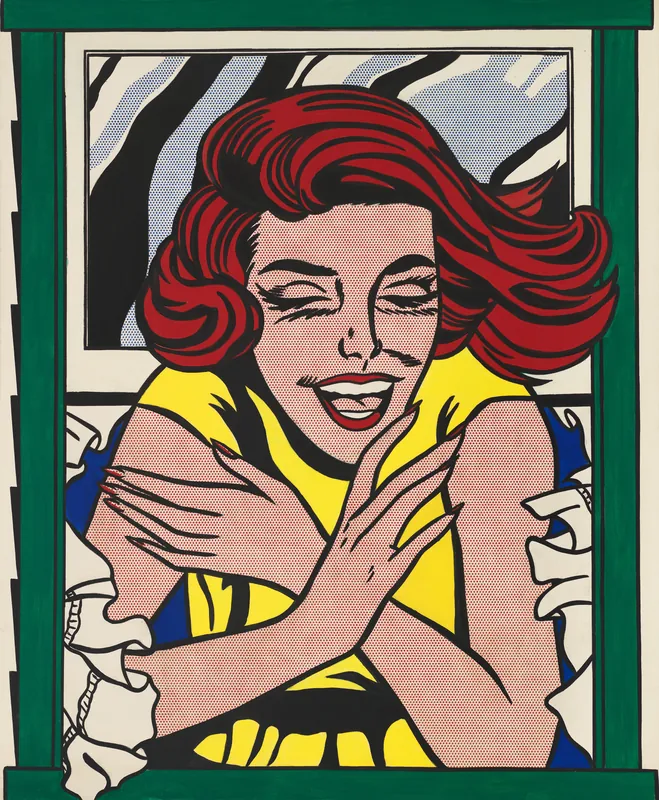
Read moreRoy Lichtenstein’s Whitney Retrospective Says He Saw the Repost Coming
In the German pavilion, Henrike Naumann, who died in February at 42, left behind an installation of ripped curtains and everyday objects meant to refuse making a fascist-era building “cozy,” per its wall text. Japan’s Ei Arakawa-Nash invited visitors to adopt sand-weighted baby dolls, and when pavilions shut in protest, a sign outside read “the babies are on strike.” Apollo’s pick for the best pavilion is a pavilion that never was: Gabrielle Goliath’s Elegy, commissioned for South Africa’s pavilion but cancelled by the country’s culture minister and now installed in the Chiesa di Sant’Antonin, where women hold single vocal notes in turn.
Where the music was
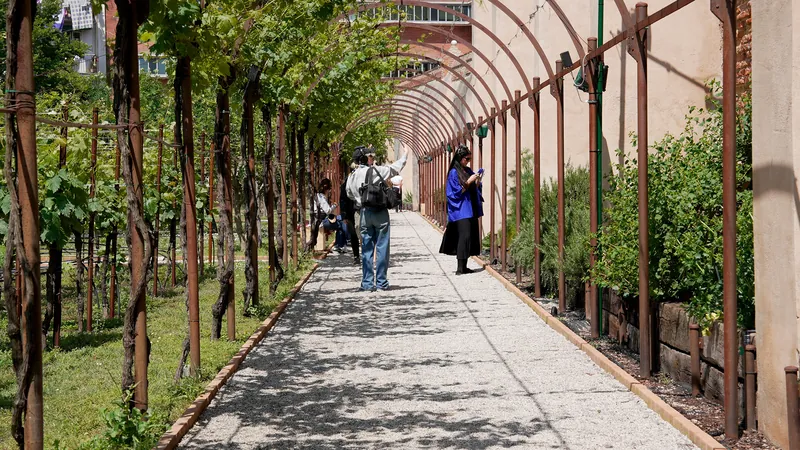
The most music-heavy room is the Vatican’s. The Holy See pavilion, The Ear Is the Eye of the Soul, curated by Hans Ulrich Obrist and Ben Vickers, sends visitors through a 17th-century Carmelite garden on headphones, listening to new sound works by Brian Eno, FKA twigs, Patti Smith, Jim Jarmusch and others. Our full preview of the pavilion has the lineup.
The after-hours were just as musical. Dazed spotted Björk “radiating pure joy” in Bottega Veneta at the Icelandic pavilion’s opening party, Kelsey Lu playing a secret show at Palazzo Diado with Willem Dafoe in the crowd, and the Italian star Cicciolina performing her Italo disco hits. The off-site show Strange Rules, curated by Mat Dryhurst, Holly Herndon and Hans Ulrich Obrist around what Dazed calls Protocol Art, drew its own fans. At Fondazione Prada’s Venice palazzo, Helter Skelter pairs Arthur Jafa and Richard Prince in more than 50 works through Nov. 23. Jafa’s work, Hypebeast notes, explores the Black experience within music and film.
The politics
No Biennale has had a rougher run-up. Just before opening, the entire international jury resigned amid tension over Israel and Russia, soon after announcing it would not consider pavilions from countries whose leaders face International Criminal Court charges, as ARTnews and Dazed report. ARTnews notes that the new Biennale president, Pietrangelo Buttafuoco, has claimed a policy of “neutrality,” allowing all countries to take part. Dazed reports the biggest protests in recent Biennale history, with hundreds on the streets in support of Palestine and several pavilions closing in solidarity. ARTnews’s reviewer found the Russian pavilion showing cut flowers and handing out free vodka, and notes that Israel is showing in the Arsenale while its pavilion is under construction.
Whatever your view, the effect is that the Biennale has two stories at once: the art, and the argument about who gets to show it. The same reviewer found the U.S. pavilion, by Alma Allen, emptier than they had ever seen it. The crowd moves to New York next, where Frieze opens on Wednesday. See our Frieze New York report.
- Dates
- Preview May 6–8; open May 9 to Nov. 22, 2026
- Where
- Giardini, Arsenale and sites across Venice
- Curator
- Koyo Kouoh (died May 2025), realized by her team
- Participants
- 110 invited artists, collectives and organizations in the main show
Added to the High Grailed archive on October 12, 2026.