The song stuck in your head this month might have been sung through Suno, streamed by a bot or pushed by a “fan” page with a marketing budget. Over three days this week, all three stopped being hypotheticals.
On Tuesday (Oct. 6), a federal judge in Manhattan sentenced North Carolina musician Mike Smith to 18 months in prison in what both sides call the first criminal prosecution of streaming fraud in the U.S. On Wednesday and Thursday, Dazed published two investigations: one into marketers who pose as fans on TikTok, and one into masked artists who use the AI music generator Suno to change their voices.
Read moreTaylor Swift, SZA and Phoebe Bridgers: The 2027 Best Original Song Race, Explained
The short version: the bot farm was a crime, the voices are a gray area and the fan pages are marketing. What ties them together is the one thing streaming runs on, which is trust that the music you hear, and the people hyping it, are what they say they are.
What did Mike Smith actually do?
Prosecutors say that from 2017 to 2024, Smith ran thousands of fake accounts across Spotify, Apple Music, Amazon Music and YouTube Music and used them to play hundreds of thousands of AI-generated songs billions of times. Complex puts the number of bot accounts at as many as 10,000. Smith had a catalog of his own, but according to prosecutors he also bought AI-made tracks, uploaded them and pointed the bots at them. They say the scheme brought him more than $8 million in royalties.
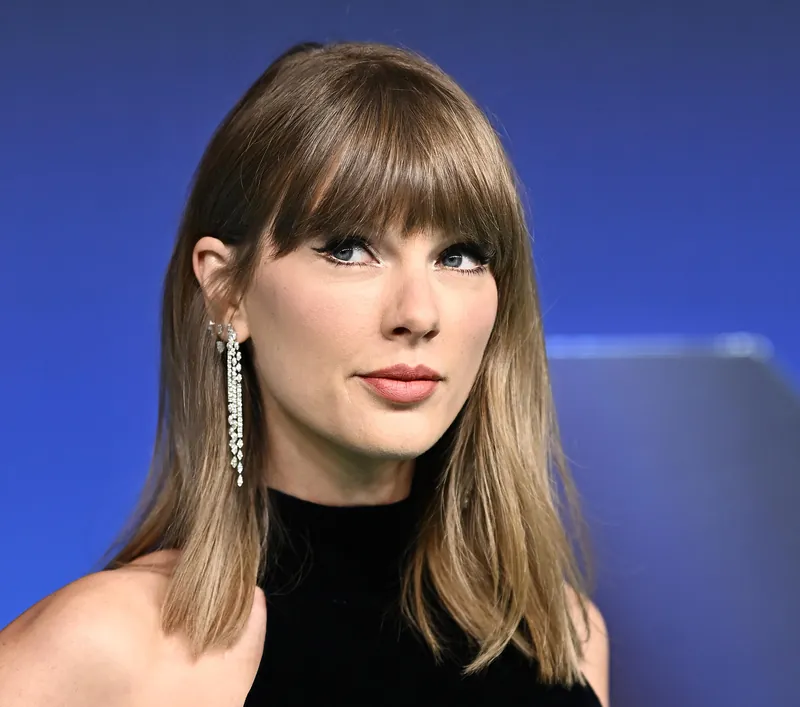
One example from the government's case shows the scale. In April 2023, Taylor Swift's entire catalog drew 9.3 million family-plan streams on YouTube Music. In the same month, Smith's bot accounts used family plans to play his AI music 80.9 million times, Music Business Worldwide reported.
Smith pleaded guilty in March to one count of conspiracy to commit wire fraud. Judge John G. Koeltl gave him 18 months, plus two years of supervised release, and ordered him to forfeit $8,091,843.64. That's well short of the 46 months or more prosecutors wanted; his lawyers had asked for probation. Choking up in court, Smith said, “I have made a mess of what was an honorable life,” Rolling Stone reported.
By flooding music streaming platforms with automated bots in the place of consumers, and fake songs in the place of creativity, Smith robbed millions in royalty payments from genuine artists and their fans.
Jamie McDonald, U.S. Attorney for the Southern District of New York, Pitchfork
Why does a bot farm hurt anyone else? Spotify and Apple Music pay out of a shared pot, splitting it by each artist's share of total streams, so every fake play shrinks everyone else's slice, as Pitchfork explains. One more detail is very 2026: the Justice Department's release called the case “Super Intelligence-Assisted Music Streaming Fraud.” As Rolling Stone noted, Executive Order 14434, signed Sept. 29, told executive-branch agencies to swap “artificial intelligence” for “super intelligence.”
Is Kilo Kent's voice AI?
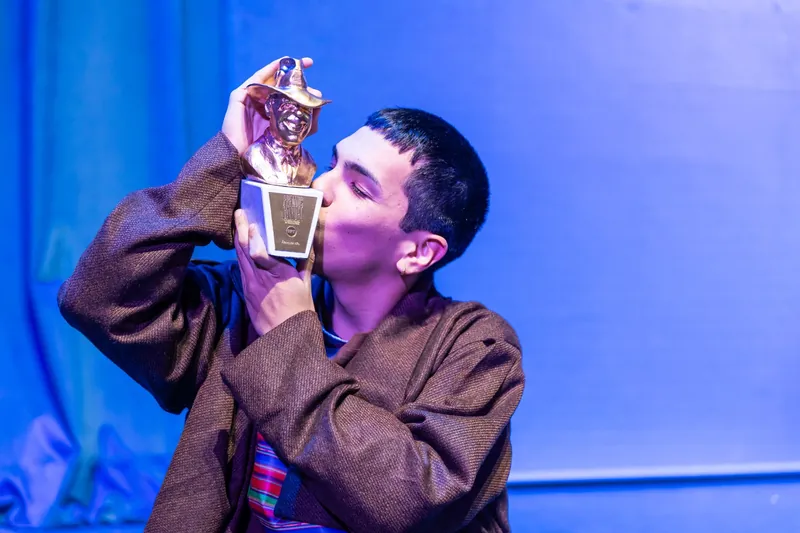
Partly, and he says so. Dazed's Solomon PM couldn't open TikTok without hearing “40's” by Kilo Kent, a masked rapper whose hooky, glossy trap-pop had commenters convinced it was AI. Kilo and Zemi, a singer fronted by an AI avatar, are both signed to Isekai Records, and both told Dazed they run their vocals through Suno. “Yes, the voice is AI, but all the rest is produced by me – the beats, the top lines, the production,” Zemi said.
Kilo Kent@kilokentTikTokDu Du out everywhere 🤐
Aug 25, 2026 · View on TikTok ↗Kilo's defense is a cooking metaphor.
Think of AI-assisted music like an oven. You prepare the dish, you chop the vegetables, you salt it, you do everything, right? Then, you pop it in the oven. That’s not oven-generated food.
Kilo Kent, Dazed
Real AI slop, in his telling, is the frozen lasagna you throw in the microwave. The label behind him has a history worth knowing, though. Isekai first made its name by signing the producer Haven, whose viral “I Run” drew allegations that its vocals used Suno to impersonate Jorja Smith. Spotify removed the track in November 2025 over impersonation concerns. Isekai re-released it with a human singer, and that version has passed 250 million streams, per Dazed. When Isekai demanded to vet Dazed's article and was told that isn't how journalism works, the label accused the writer of pushing a “false narrative” and told Dazed to cancel the piece.
Oliver Bown, an associate professor and music technology expert at the University of New South Wales, told Dazed there's no clean line between “AI-assisted” and “AI-generated” music, just a continuum. “These can be fun experiments but they can also be very cynical commercial enterprises: if the musician doesn’t exist, the entire persona becomes a commodity,” he said, adding that he couldn't say whether that applied to Kilo Kent and Zemi.
Suno itself is in court. On Sept. 18, Sony Music and Universal Music Group filed a new suit arguing that even Suno's v6 models, launched with licensing partners Warner Music Group, BMG and Believe, still infringe their recordings because v6 was partly trained on outputs of earlier models. “V6 is not a fresh start; it is the fruit of the same poisoned tree,” the labels wrote. A Suno spokesperson called the claims “fundamentally flawed on both the facts and the law,” Variety reported.
Are the fan pages real?
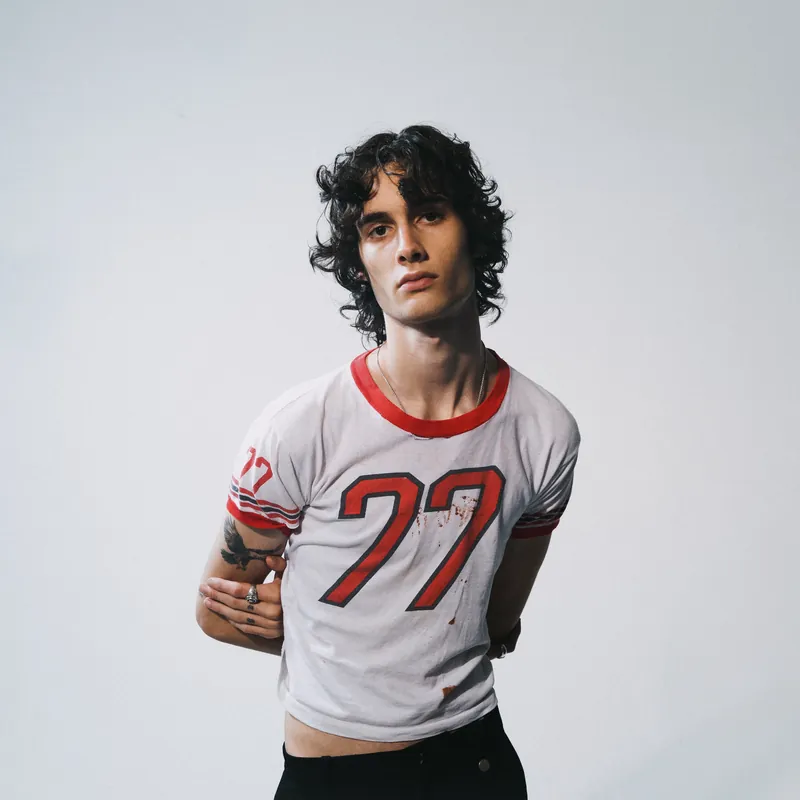
Some are and some aren't, which is the problem. Dazed's Lucy Harbron started with @sombrfans, a TikTok page stocked with sombr concert clips shot from photo pits at his shows around the world, which is unusual access for a fan. Fans on Reddit have speculated that his team runs it. sombr's PR didn't respond to Dazed, so that remains unconfirmed.
The practice itself isn't speculation. Briony Graham-Rudd, a photographer and social media manager, told Dazed that running smaller artists' socials now often includes running “fake” fan accounts too. One she works on for a label is a '90s culture TikTok, whose posts are soundtracked with music from the artists she's trying to promote. Liam James Ward, founder of the music social media agency Something Something, described “pumping out edits” set to clients' songs on Buffy the Vampire Slayer fan accounts his agency created.
We are in an arms race of content output, whether we like it or not.
Liam James Ward, founder of Something Something, Dazed
Fans are pushing back. Dazed points to the outrage when it came out that the rock band Geese had hired a digital agency, Chaotic Good, to get their music into recommendation algorithms. Dr. Lucy Bennett, an expert in music fandom, urged some caution in the other direction, telling Dazed that “some genuinely are just fans or creators who like the music.”
What are the platforms doing about it?
Spotify's rules, announced last September, allow vocal impersonation only when the impersonated artist has authorized it, and announced a spam filter aimed at mass uploads and similar tricks. Spotify said it had removed more than 75 million “spammy tracks” in the previous 12 months. Since April 16 of this year, a beta feature has let artists disclose how they used AI in their Song Credits, and Spotify says tens of thousands of AI credits are being submitted daily. It's disclosure, though, not detection. (For how Spotify treats artists' secret second profiles, see our burner-account explainer.)
Because we depend on artist disclosure, the absence of a credit doesn’t mean AI wasn’t used.
Spotify, Spotify Newsroom
The industry's trade bodies cheered the Smith sentence. The global recording trade group IFPI said it “sends a clear message that streaming fraud is a crime and has serious consequences,” while adding that enforcement is “only one part” of fixing the problem, per Music Business Worldwide.
So how do you know what's real?
Increasingly, you take the artist's word for it. Olivia Rodrigo gave hers this week. “I would never use AI in any of my music,” she told The Hollywood Reporter, in comments Complex picked up. “Absolutely no. Hard line on that.”
Everyone else is asking listeners to trust a credit, a label or a fan page, and that's the part this week shook. Ward, whose agency builds fan pages for a living, summed up the mood to Dazed.
People are really scared that they are not sure what's real or not anymore.
Liam James Ward, Dazed
- Sentence
- 18 months in prison, 2 years supervised release
- Forfeiture
- $8,091,843.64
- Scheme
- 2017–2024, bot streams of AI songs on Spotify, Apple Music, Amazon Music and YouTube Music
- Judge
- John G. Koeltl, Manhattan federal court
- Suno lawsuit
- Sony Music and UMG vs. Suno over v6, filed Sept. 18
Sources
- Pitchfork: Man Sentenced to Prison for Bot Streams of AI Songs (Oct. 7, 2026) ↗
- Rolling Stone: Music Streaming Fraudster Sentenced to 18 Months in Prison (Oct. 6, 2026) ↗
- Rolling Stone: The First Music Streaming Fraud Case Gets Caught Up in Trump's AI Rebrand (Oct. 7, 2026) ↗
- Complex: Music Streaming Fraudster Gets 18 Months in Prison (Oct. 7, 2026) ↗
- Music Business Worldwide: Michael Smith sentenced to 18 months in prison (Oct. 7, 2026) ↗
- Dazed: 'Suno is the new auto-tune': Meet the artists using AI to go viral (Oct. 8, 2026) ↗
- Dazed: The insidious rise of fake TikTok fan accounts (Oct. 7, 2026) ↗
- Variety: Sony Music, Universal Music Group Sue Suno Over Label-Backed Model (Sept. 18, 2026) ↗
- Spotify: Spotify Strengthens AI Protections for Artists, Songwriters, and Producers (Sept. 25, 2025, updated) ↗
- Complex: Olivia Rodrigo Will 'Never' Use AI in Her Music (Oct. 7, 2026) ↗
- TikTok: Kilo Kent, 'Du Du out everywhere' ↗