A new French law has put the country’s free-party scene on the wrong side of a two-year prison sentence, and Paris’ underground is getting creative about it. Dazed went below the city, into a maintenance tunnel south of the Seine, to meet an organizer who says that if you added up every party she has thrown, she would face “40 years in jail.”
What does the law do?
RIPOST, short for “Immediate Responses to Phenomena Disturbing Public Order, Security and Tranquillity,” was introduced by Interior Minister Laurent Nuñez and lumps free parties in with motorized street rallies, squatting and the misuse of nitrous oxide. Parliament adopted it in July. On Aug. 14 the Constitutional Council validated the main articles, including the free-party penalties, and struck seven other provisions plus five riders. In its decision, per AFP, it described the aim as punishing abuses of the freedom of assembly at illegal gatherings that pose serious risks to people’s safety.
Read moreTurnstile Follow Their SNL Debut With a Free Show at the Washington Monument
For free parties, the threshold for a mandatory declaration drops from 500 people to 250. Organizing an undeclared event can now carry up to two years in prison and a €30,000 fine, and police can confiscate equipment. Attending one risks six months and a €7,500 fine, or a fixed €300 penalty to avoid prosecution, according to franceinfo.
Who’s fighting it?
The League of Human Rights (LDH) argued the law was unconstitutional. Sophie Mazas, a human rights lawyer who works with the group, told Dazed it risks framing partygoers as a public-order threat and legitimizing a more aggressive police response. “It is just a big party, not a revolution,” she said.
The organizers are more blunt. Paul Seul, a DJ and co-founder of the Parisian hardstyle collective Casual Gabberz, plays free parties across France, including May’s Teknival, which drew tens of thousands to a former military site. He thinks the law reaches far past techno.
It’s very serious. It’s a political topic. They start with techno and free parties, cause it’s easy to say ‘they do drugs’, ‘they damage nature’, but it’s also going to affect the small neighbourhood traditions, events like Fete de la Musique. It’s just a new tool of mass control.
Paul Seul, DJ and Casual Gabberz co-founder, Dazed
He also called out Francophone pop for staying quiet, noting that even Daft Punk played free parties in their early days.
What does it look like on the ground?
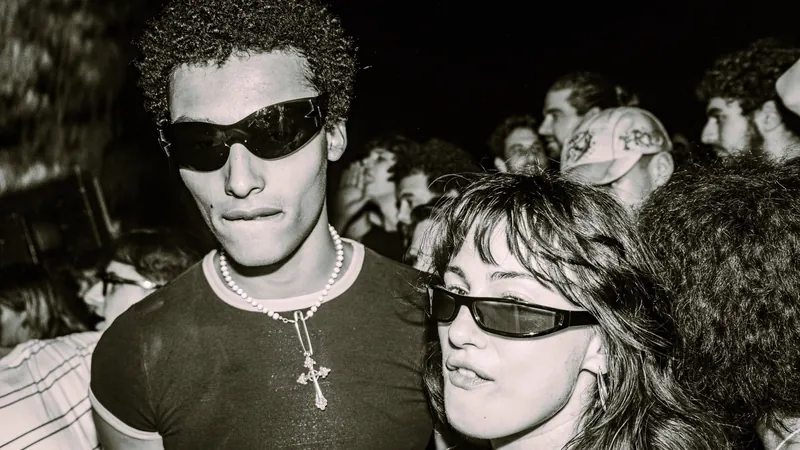
The mood is defiant. Paris’ Techno Parade, an annual rave on trucks and sound systems launched in 1998, returned for its 26th edition on Sept. 19, its first since 2023. Marchers carried signs reading “Répression: on monte le son” (“Repression: we turn up the volume”), and photographer Szymon Stępniak told Dazed he didn’t experience it as an angry protest: “there was a sense that something was at stake – but rather than anger, I mostly felt celebration.”
In the tunnel, the organizer, who goes by IRL and runs the collective and label Hise, is staying in business: she plans to keep her parties under 250 people and to film each guest arriving, so there’s a record of the numbers if police seize her register. “A lot of the ecosystem is scared and will not be willing to take the risk,” she says.
The pressure extends to venues. Le Station, a Paris club that has become a home for diasporic and queer communities, faces a three-year closure for redevelopment, Dazed notes, and Seul has little patience for the city’s club scene. “This city is a museum,” he said. “It’s not a good city for clubs.”
IRL’s plan is to keep going, underground.
- Law
- RIPOST, validated by the Constitutional Council on Aug. 14, 2026
- Declaration threshold
- Lowered from 500 to 250 people
- Organizers
- Up to two years in prison and a €30,000 fine
- Attendees
- Up to six months and a €7,500 fine, or a €300 fixed penalty
Sources
Added to the High Grailed archive on October 11, 2026.